
How Solaris Uses the Sun to Optimize Your Building
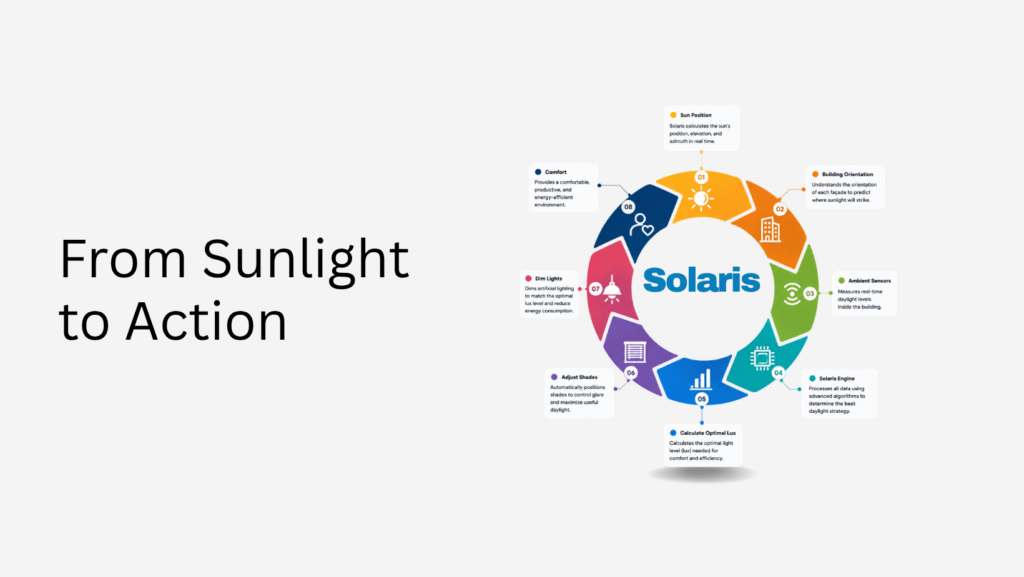
Natural daylight is one of the most valuable resources for any building—but without intelligent management, it can also create excessive heat, glare, and higher energy costs. Solaris transforms sunlight into an advantage by using artificial intelligence, environmental data, and real-time automation to optimize indoor comfort while reducing energy consumption. Instead of relying on fixed schedules or manual adjustments, Solaris continuously analyzes the position of the sun, your building’s orientation, and indoor lighting conditions to determine the ideal shading position throughout the day. Step 1: Tracking the Sun’s Position Every day, the sun follows a different path across the sky. Solaris calculates the exact position of the sun based on your building’s geographic location, date, and time. This allows the system to predict where sunlight will enter the building before it creates glare or overheating. Benefits Step 2: Understanding Building Orientation Every façade receives sunlight differently depending on its direction. East-facing windows receive morning sun, while west-facing façades experience stronger afternoon heat. Solaris maps each façade individually, allowing every window and shading zone to respond independently for maximum efficiency. Benefits Step 3: Monitoring Ambient Light Solaris works with ambient light sensors installed throughout the building. These sensors continuously measure indoor daylight levels in real time. Instead of simply closing shades whenever sunlight appears, Solaris balances natural light with indoor lighting requirements to maintain ideal illumination. Benefits Step 4: Making Intelligent Decisions with AI Using data from sun tracking, building orientation, and light sensors, Solaris automatically determines the optimal shade position. The AI continuously adjusts shading throughout the day to maintain comfort while maximizing energy efficiency. This intelligent automation helps eliminate manual operation and ensures the building always performs at its best. Benefits Step 5: Creating Comfortable Spaces The result is a healthier, more comfortable building where occupants enjoy natural daylight without excessive heat or glare. Comfortable workspaces improve focus, productivity, and overall occupant satisfaction while reducing operational costs for building owners. The Outcome With Solaris, your building doesn’t just react to sunlight it anticipates it. By combining solar calculations, façade intelligence, ambient light monitoring, and AI-powered automation, Solaris creates buildings that are smarter, more efficient, and more comfortable every day. Why Choose Solaris? Solaris helps commercial buildings optimize daylight, reduce HVAC energy consumption, improve occupant comfort, and support sustainability goals through intelligent AI-powered shading automation.